

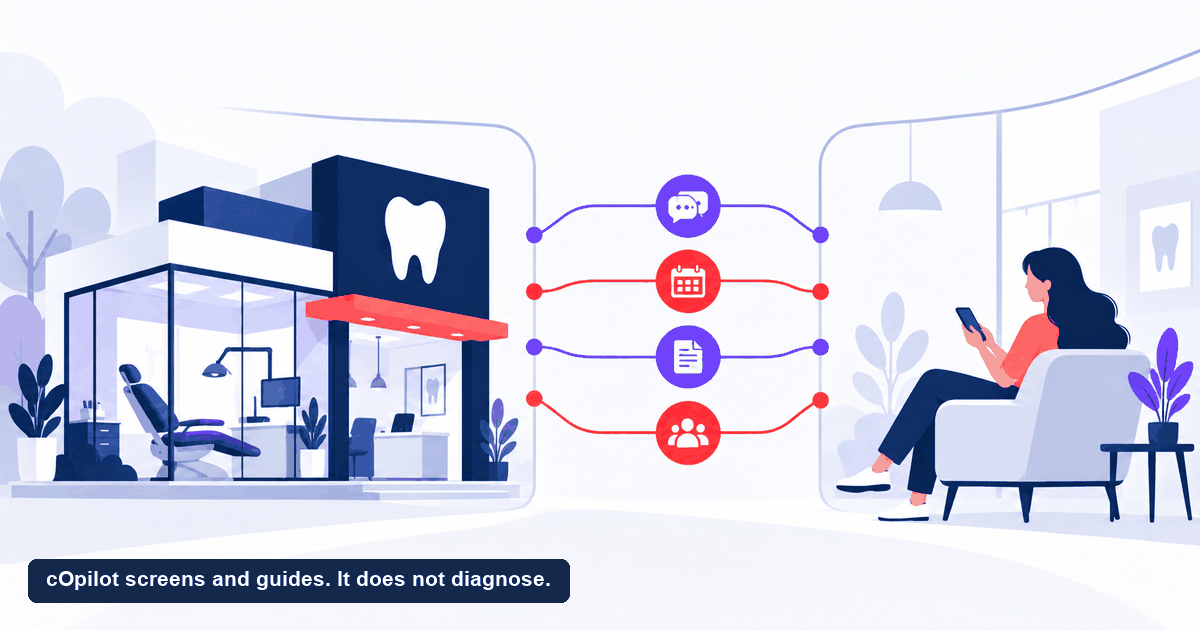
A patient calls to confirm an appointment and gets voicemail. A new visitor fills out a form on your website at 9pm and hears nothing until Tuesday. A patient who is due for a cleaning quietly drifts to a practice that texted them first. Each of those is a broken connection, and each one costs you a chair. Patient engagement software is the category of tools built to close those gaps. So what is patient engagement software, and how does a dental practice actually use it? This guide breaks down what the category does, the core building blocks, why it matters, and how to choose without buying five things you do not need.
What is patient engagement software?
Patient engagement software is any tool that helps a healthcare or dental practice communicate with patients and keep them active across the full relationship, from the first website visit to the recall reminder two years later. Instead of your team manually calling, emailing, and chasing every patient, the software automates and organizes those touchpoints so fewer people fall through the cracks.
In a dental setting, patient engagement covers a lot of ground: getting a new visitor to book, confirming that they show up, answering their questions, collecting forms, reminding them when they are due, and staying in touch after the visit. No single feature does all of that. The term describes a category, not one product.
That distinction matters when you shop. Some vendors sell a broad suite that tries to cover every touchpoint. Others do one job well and connect to the rest of your stack. Knowing which pieces you actually need keeps you from paying for overlap.
What dental patient engagement software actually does
Most dental patient engagement software is built from a handful of common building blocks. You rarely need all of them, but it helps to know the full menu so you can spot gaps and overlaps in your current setup.
- New patient capture and booking. Turning website visitors and inquiries into booked appointments before they bounce to a competitor. This is the top of the funnel.
- Appointment reminders and confirmations. Automated texts or emails that nudge patients before a visit to cut no-shows. Usually a feature of a texting or practice-management platform.
- Two-way patient texting. Letting patients and staff message back and forth for questions, confirmations, and quick logistics.
- Recall and reactivation. Reaching out to patients who are due for a cleaning or who have lapsed, to bring them back.
- Digital forms and intake. Collecting medical history and consent online before the patient arrives.
- Reviews and reputation. Requesting and managing online reviews to build local trust.
- Billing and payment communication. Sending statements, payment links, and balance reminders.
A full patient engagement suite bundles many of these. A focused tool does one or two and integrates with the others. Neither approach is automatically better. The right mix depends on where your practice is actually leaking patients.
Why patient engagement matters for a dental practice
Strong patient engagement is not a nice-to-have. It maps directly to revenue, because much of the revenue a practice loses slips away in the gaps between touchpoints, not in the chair.
Think about where connections break in a typical week. Calls come in while your front desk is with a patient. Website forms land after hours. Patients who meant to rebook never do. Each of those is demand you already paid to create, through marketing, referrals, and reputation, and then lost to a slow or missing response.
Good patient engagement closes those gaps in a few concrete ways:
- It responds when your desk cannot. After-hours and lunchtime interest gets a reply instead of a voicemail, so fewer prospective patients give up and move on.
- It reduces friction. Booking, forms, and questions happen in the channels patients already use, which means more of them finish what they started.
- It keeps patients active. Timely recall and follow-up bring lapsed patients back before they find a new practice.
- It gives your team back time. Automating repetitive outreach frees staff to focus on the patients in front of them.
The through-line is simple. Better dental patient communication means fewer dropped connections, and fewer dropped connections mean more booked, kept appointments.
How to choose dental patient communication tools
Because patient engagement is a category and not one product, the goal is not to buy the biggest suite. It is to find the smallest set of tools that covers your real gaps and works together cleanly. A few questions to guide the decision:
- Where are you actually losing patients? Map your leaks first. If new visitors bounce off your website unbooked, a front-desk capture tool matters more than another reminder system. If patients no-show, reminders matter more. Fix the biggest leak first.
- Does it integrate, or does it silo? A tool that traps data in its own dashboard creates more work. Look for clean handoffs into the systems you already run, whether that is your calendar, your practice-management software, or your patient records.
- Is it built for dentistry? Generic communication tools can send a text, but they will not understand dental context, services, or scheduling patterns the way a purpose-built tool does.
- How does it handle patient data? Dental patient communication touches sensitive information. Ask how data is stored, who can access it, and whether it is encrypted. In regulated markets, confirm the vendor’s compliance posture rather than taking a logo on a page at face value.
- How fast can you go live? Some suites take weeks of onboarding. Others install in minutes. Match the lift to the size of your team.
Want to size the opportunity before you buy anything? Our missed revenue calculator helps you estimate what unanswered inquiries and missed bookings are costing your practice, so you can prioritize the tool that pays for itself first.
Where cOpilot fits in your patient engagement stack
cOpilot by scanO is not a full patient engagement suite, and it is not trying to be. It handles one specific, high-value slice of engagement: the website front desk, where new-patient interest arrives and is most often lost. It sits on top of the reminder, recall, texting, and reputation tools you already run, rather than replacing them.
Here is the narrow, honest scope of what cOpilot does:
- Greets every website visitor 24/7 and answers their questions from your clinic’s own knowledge base.
- Books new appointments directly into your clinic calendar, and triages dental emergencies to your phone line.
- Runs an optional in-chat AI oral-health scan. The scan is for engagement and triage only. It is not a diagnosis and does not replace an in-person dental exam, and it gives a hesitant visitor a reason to book.
- Captures every chat, scan, and new booking in the Engage lead dashboard, so clean, structured lead data is ready for your team to work in the tools your practice already uses.
Notice what is not on that list. cOpilot does not send appointment reminders or confirmations, it does not do two-way patient texting, it does not manage reviews, and it does not reschedule existing appointments or run recall campaigns. Those jobs belong to the other tools in your engagement stack. cOpilot’s role is to win the new patient at the front door and hand clean data to everything downstream. For the full picture of how that front-desk layer works, see our AI receptionist for dentists hub.
On the practical details: cOpilot Plus is $199 a month and Pro is $299 a month, with a 15-day free trial you can extend to 30 days. Setup is no-code. Drop in one snippet and you can be live in under 10 minutes. On data, handling is HIPAA-aligned, GDPR-compliant, and ABDM-aligned for India, and patient data is never used to train AI models.
If your biggest leak is new-patient interest slipping off your website after hours, that is exactly the gap cOpilot is built to close. Start your free trial and see how many new bookings your site can capture while your front desk stays with patients in the chair. Prefer a guided walkthrough first? Book a demo and we will show you how it fits alongside the tools you already run.
FAQ
What is patient engagement software? Patient engagement software is the category of tools that helps a dental or healthcare practice communicate with patients and keep them active across the whole relationship, from the first website visit to recall. It covers jobs like new-patient booking, reminders, texting, forms, recall, and reviews. No single product does everything, so the term describes a category rather than one tool.
Is patient engagement software the same as practice management software? No. Practice management software runs the operational core of a clinic, such as scheduling, charting, billing, and records. Patient engagement software focuses on communication and keeping patients connected. They overlap and should integrate, but they solve different problems, and many practices run both.
What features should dental patient engagement software have? It depends on where your practice loses patients. Common building blocks include new-patient capture and booking, appointment reminders and confirmations, two-way texting, recall and reactivation, digital forms, and reviews. Choose the pieces that cover your real gaps rather than buying every feature at once.
What is the difference between patient engagement and patient communication? Patient communication is the act of exchanging messages with patients, such as a text or an email. Patient engagement is the broader goal of keeping patients active and connected over time, which good communication supports. Engagement is the outcome, communication is one of the tools that gets you there.
Does cOpilot replace my patient engagement software? No. cOpilot handles one part of engagement, the website front desk, where it greets visitors, answers questions, and books new appointments. It does not send reminders, run recall, do two-way texting, or manage reviews. It works alongside those tools and keeps clean new-patient data in the Engage dashboard for your team to work from.